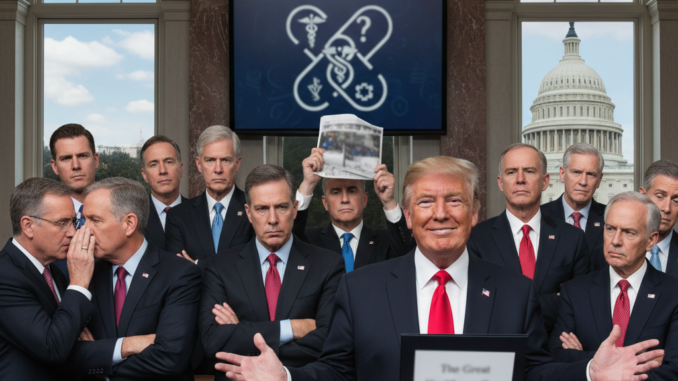
Trump’s „Great Healthcare Plan“ Faces Congressional Skepticism
President Trump has recently unveiled a comprehensive healthcare proposal, dubbed the „Great Healthcare Plan,“ aiming to overhaul the American healthcare system. The plan seeks to lower drug prices by pegging them to international benchmarks, reduce insurance premiums, and enforce transparency among insurance companies. A central feature involves direct payments into health savings accounts, empowering individuals to purchase insurance independently.
The administration argues this approach will foster competition, reduce costs, and empower patients. It also aims to revive funding for cost-sharing reductions linked to Affordable Care Act silver plans, reversing premium increases that followed the Trump administration’s 2017 decision to halt insurer reimbursements.
However, the plan faces criticism and uncertainty. Democrats have dismissed the proposal as inadequate, and it remains unclear whether Congress will take action. This sets the stage for a contentious political battle on Capitol Hill.
Trump’s Tariff Threats and Trade Tensions
President Trump continues to wield tariffs as a central tool in his foreign policy, sparking both tension and uncertainty in international trade relations. He has suggested implementing tariffs on countries that „don’t go along“ with his plans for Greenland and has also threatened to increase the baseline reciprocal tariff rate to 15-20%.
These actions have drawn criticism and concern from various quarters. Europe has warned of a „dangerous downward spiral“ following Trump’s threats of tariffs over Greenland. The implementation of reciprocal tariffs has also faced legal challenges, with ongoing litigation and appeals.
Trump has also used Truth Social to suggest that NATO countries should place a 50–100% tariff on China until the war in Ukraine ends. While a trade deal was struck with Ecuador which removed reciprocal tariffs for certain products, trade relations remain complex and subject to potential shifts.
Debate over War Powers Act Intensifies
Following President Trump’s decision to use military force in Venezuela, a debate has reignited regarding the War Powers Act and the extent of presidential authority in military actions. Trump has questioned the constitutionality of the War Powers Act, claiming it violates Article II of the Constitution.
Lawmakers have pushed back against this assertion, emphasizing Congress’s constitutional right to declare war. The last time Congress formally declared war was during World War II; since then, presidents have often initiated military actions without explicit congressional authorization.
The US Senate advanced a resolution to limit further military operations in Venezuela without congressional backing, highlighting the ongoing tension between the executive and legislative branches on matters of war and peace.
Bildquelle: KI-generiert – Dieser Beitrag wurde erstellt von US Korrospondent